I’d use legal funding pre-qualification to check costs - not count on cash. Before signing, I’d ask my attorney to compare written repayment totals at 12, 24, and 36 months with what I could keep after fees, expenses, and liens.
Here’s what I’d check:
- Eligibility: Does the provider fund my case type in my state, and which records does it need?
- Budget: How much do I need, what can it pay for, and what happens if my case takes longer?
- Terms: How do fees grow, who gets paid first, and would I owe anything if I recover nothing?
- Protections: Could sharing records put legal privacy protections at risk, and does the contract leave settlement decisions with me?
<u>Pre-qualification is not final approval.</u> I’d treat referrals and preliminary estimates as starting points - not promises - and keep any advance out of my budget until the agreement is signed and the funds clear. The goal is less financial pressure, without losing too much of my recovery.
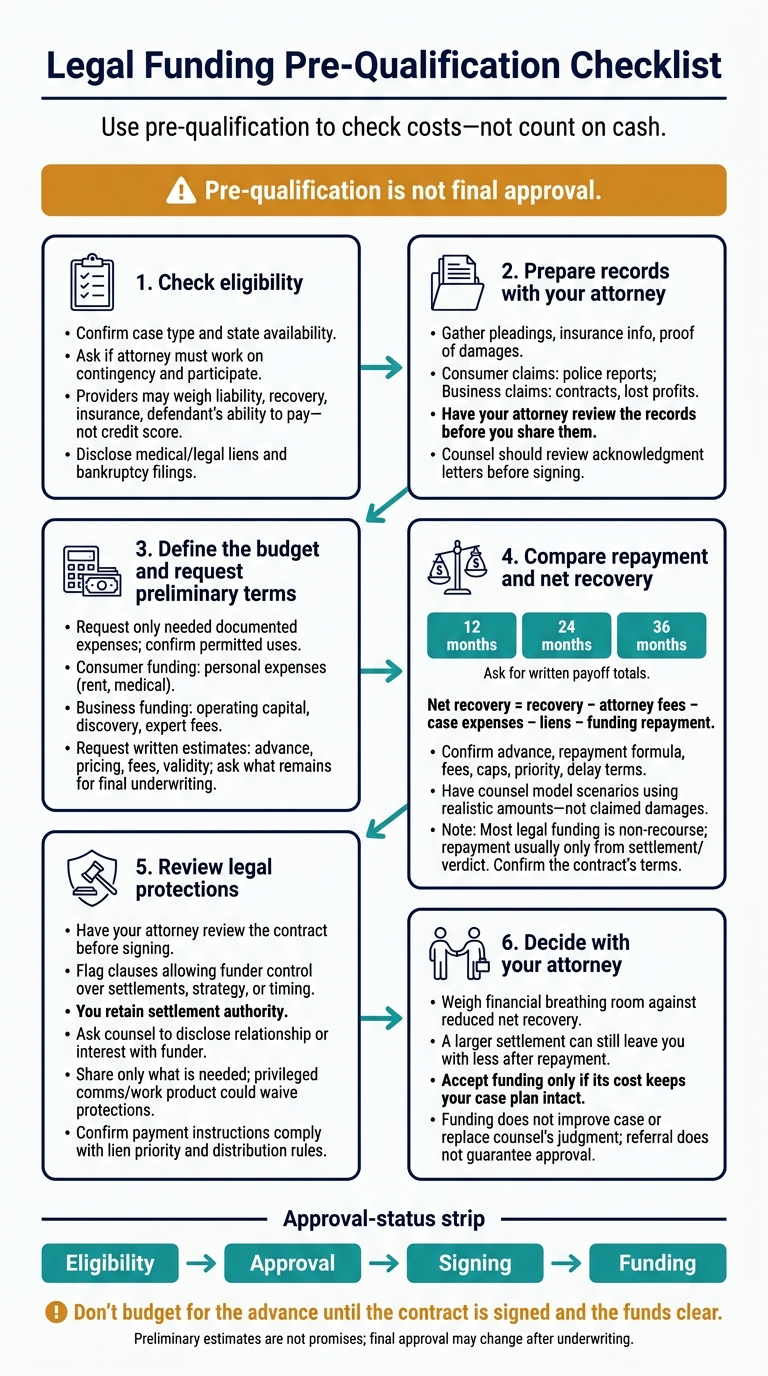
Legal Funding Pre-Qualification Checklist
Check Eligibility and Prepare Case Records
Have your attorney confirm which funding type fits your case plan. It should cover the costs you face and help ease financial pressure during delays. Consumer funding usually pays for personal expenses, such as rent or medical bills. Business litigation funding usually covers operating capital, discovery, and expert fees. Once you know the funding type, check whether your case qualifies and what the provider needs next.
Check Case Requirements and State Availability
Check whether the provider funds cases in your state. Also ask whether your attorney must work on contingency and take part in the review.
Eligibility may depend on the case - not your credit score. Providers may weigh liability, estimated recovery, insurance coverage, and the defendant’s ability to pay. Disclose any medical or legal liens and bankruptcy filings. These details, along with state limits, can affect how much funding you receive and when you receive it. The provider’s requirements will guide which records to gather.
Gather Records With Your Attorney
Gather the filed complaint or other pleadings, insurance information, and proof of damages. That proof may include invoices, payments, emails, messages, or medical records. Consumer claims may also require police reports, while business claims may need contracts and lost-profit records.
The file should show liability, damages, and likely recovery. Have your attorney review the records before you share them to help preserve privilege and work-product protection.
Your attorney’s cooperation helps verify the claim and case timeline. If the provider requests an acknowledgment letter, have counsel review it carefully so the attorney’s role is clear before anyone signs. An organized file puts you in a better position to compare preliminary terms before making a commitment.
Get Preliminary Terms and Confirm Next Steps
Ask what the initial review covers and what still needs to happen before final underwriting. Request written estimates of the advance, pricing, and fees, plus how long those estimates remain valid. Use them to compare funding options before taking any binding step.
Treat eligibility, approval, signing, and funding as separate steps. Don’t budget for the advance until the contract is signed and the funds clear.
sbb-itb-22d0d6e
Match Funding to Your Case Plan
Review preliminary terms alongside your attorney’s timeline to see whether funding fills a budget gap. Funding may ease financial pressure, but it does not improve your case or replace counsel’s judgment.
Budget for Delays and Expenses
Check the permitted uses before assuming funds can pay for discovery or expert fees. Request only what you need to cover documented expenses.
Calculate Repayment and Net Recovery
Ask for written payoff totals at 12, 24, and 36 months. Confirm the advance amount, repayment formula, fees, caps, repayment priority, and what happens if the case takes longer than expected. Most legal funding is non-recourse, meaning repayment usually comes only from a settlement or verdict. Check the contract to confirm those terms.
Net recovery is what you keep after attorney fees, case expenses, liens, and funding repayment. Have counsel model settlement, trial, delay, and no-recovery scenarios based on realistic recovery amounts - not claimed damages.
Weigh Case Benefits Against Funding Costs
Once you’ve compared repayment terms, weigh the financial breathing room against the reduction in your net recovery. Funding being available doesn’t mean it will leave you better off.
Compare the value of waiting with the added repayment cost. Even a larger settlement can leave you with less money after repayment.
Review Legal Protections Before Signing
After comparing costs, use pre-qualification to check for risks tied to case control, disclosures, and payouts before you commit. Have your attorney review the contract before you sign to confirm disclosure rules, enforceability, and any terms that could affect control of your case.
Protect Attorney Independence and Client Settlement Rights
Flag any clause that lets the funder approve settlements, direct case strategy, or pressure you on timing. Your attorney owes loyalty to you, and you retain settlement authority.
Ask your attorney to disclose any relationship or financial interest with the funder, including any arrangement that pays the firm directly.
Then, limit the information you share and confirm how repayment will work if the case resolves.
Check Information Sharing and Repayment Order
Share only what’s needed for underwriting. Medical records, discovery, deposition testimony, and attorney assessments may help the review. But sharing attorney-client communications or work product could waive legal protections.
Ask your attorney to confirm the payment order for attorney fees, case expenses, liens, and funding repayment. Check that the contract’s payment instructions follow applicable lien priority rules and settlement distribution procedures.
Conclusion: Decide With Your Attorney
Use pre-qualification to see whether funding fits your case plan before you commit. Final approval may still change after underwriting reviews your recovery and legal limits.
Complete Your Pre-Qualification Checklist
Review your eligibility, state availability, required records, and the amount you need with your attorney. Ask for written repayment estimates at 12, 24, and 36 months, then calculate your net recovery.
Before moving forward, confirm that the protections you reviewed still apply. Accept funding only if its cost keeps your case plan intact.
Coordinate Lawyer and Funding Referrals
Once you’ve completed your checklist, consider a referral if you need one. Million Dollar Case connects clients with lawyers and funding pre-qualification support. A referral does not guarantee approval.
Work with your attorney to make the final decision, weighing how funding would affect both your recovery and your case plan.
FAQs
Does pre-qualification obligate me to accept funding?
No, pre-qualifying for legal funding does not obligate you to accept it. You can review the offer - including the advance amount, fee structure, and repayment terms - without making a commitment. If the terms don’t meet your needs or expectations, you’re free to decline.
What could change my funding terms after pre-qualification?
Your funding terms may change as your case moves forward. If you voluntarily drop your case or fire your attorney without cause, you may trigger a partial recourse clause. That can turn a non-recourse advance into money you must personally repay.
Check your contract for hidden fees and conditions that could affect repayment. Your terms often depend on how long your case takes to resolve.
How can I tell if funding costs outweigh the benefits?
Look at the total cost of capital - not just the monthly rate. Ask for written repayment projections at 6, 12, 18, 24, and 36 months. Each projection should include origination fees, underwriting costs, administrative charges, and attorney coordination fees.
Compare these totals with your case’s expected value, accounting for your chances of success and how long litigation could take.